Why a Car Wash Roof in Riverside Fails From the Inside Out
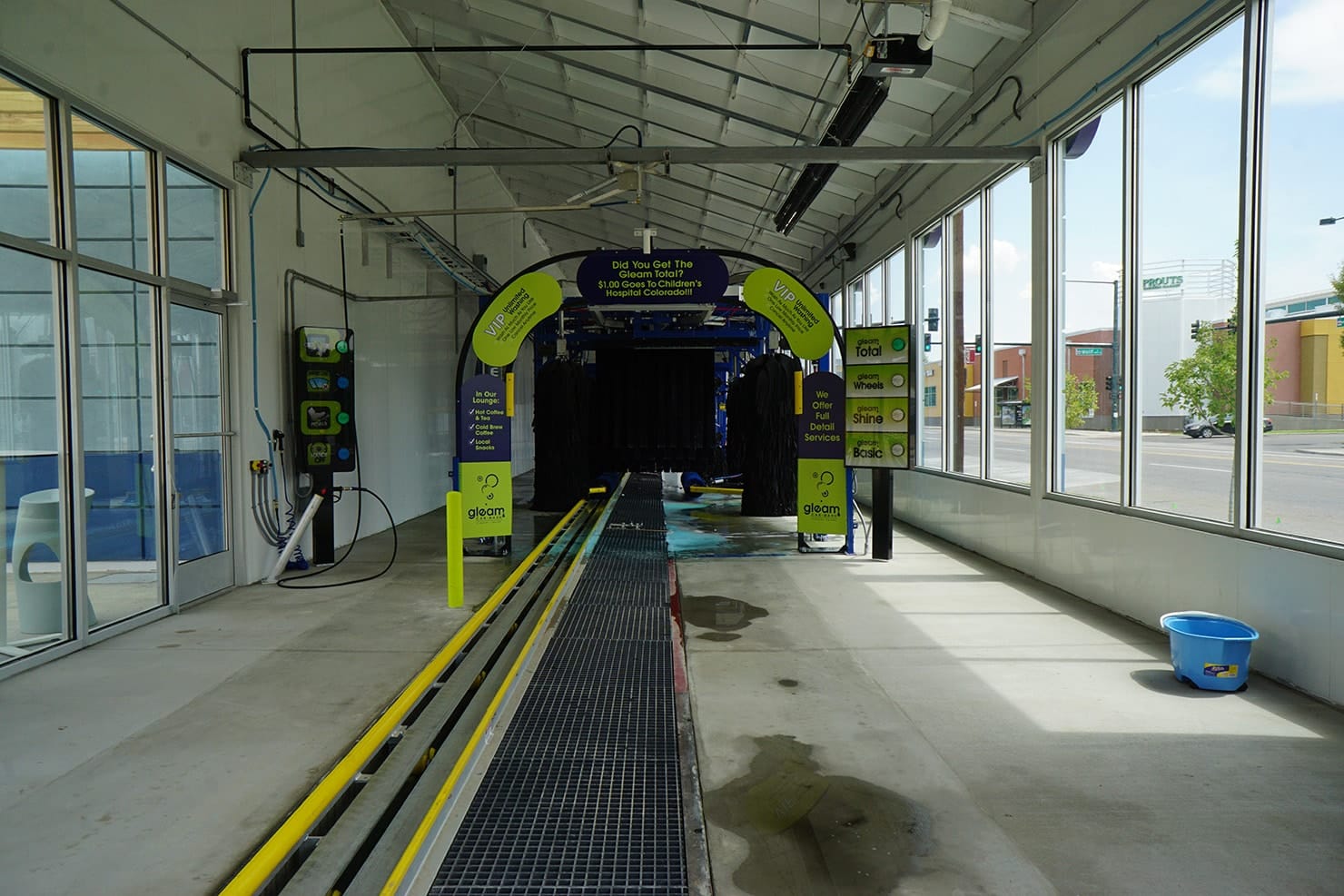
A car wash is the one commercial building where the roof is usually attacked from below before anything happens on top. The tunnel below it runs warm, wet, and chemically loaded for most of the day. Hot water, presoak, high-pH detergents, drying agents, and tire-shine compounds turn to vapor in the wash bay, rise to the underside of the deck, and condense on the steel deck, the fasteners, and the bottom face of the insulation. We have opened up plenty of Riverside wash bays where the membrane on top still looked serviceable and the deck underneath was rusting through. If your roofer only walks the surface and never looks at what the tunnel is doing to the deck, you are buying a repair that will not last a season.
That underside humidity load is the single biggest reason a car wash needs a different roofing approach than the strip center next door. We treat the deck, the vapor barrier, and the membrane as one assembly that has to handle moisture pushing up from the wash floor and weather coming down from a Riverside summer. Getting one of those three wrong is how a two-year-old roof starts staining the office ceiling.
Where Car Washes Sit in This Market
Riverside has a dense, competitive express-wash market, and the buildings are spread across exactly the corridors where traffic counts justify them. We work on washes along Magnolia Avenue, on the Tyler Street stretch near the Galleria at Tyler, out along University Avenue, on the Van Buren Boulevard run toward the airport, and on the commercial pockets feeding off the 91 and the 60. A lot of these are newer express tunnels with the full chemical menu and a long line of vacuum stalls. Others are older in-bay automatics and self-serve courts that have been re-tenanted and re-equipped over the years. The roofing scope is not the same between those formats, and we scope each one for what it actually is.
The water situation in this part of the Inland Empire matters too. Many local operators run reclaim and water-recovery systems to deal with cost and regional water-quality rules, which keeps recycled water and its dissolved chemistry cycling through the building longer. That tends to raise the vapor and chemical concentration the roof deck has to live with, not lower it.
The Roof Zones We Scope Differently
The Tunnel or Wash Bay
This is the hot zone. The deck over an active tunnel takes constant steam and chemical mist, plus thermal cycling every time hot water hits cold equipment. We favor a PVC membrane here because its chemistry stands up to the alkaline detergents and waxes far better than standard TPO or EPDM over the long run, and we fully adhere it so there is no fastener field punched through the wettest part of the roof and no membrane flutter from the tunnel's air movement. Just as important, we look hard at the vapor control and the deck condition under the membrane, because that is where tunnel roofs actually die.
The Equipment and Mechanical Room
The pump room and chemical storage carry their own exhaust and venting. These penetrations move corrosive air and need oversized, purpose-built curbs and flashing, not the generic detail used on a comfort-cooling rooftop unit. We flash each one for the air it is actually moving.
The Vacuum and Customer Canopies
On almost every express wash in Riverside, the first chronic leak shows up at a canopy. Vacuum canopies and entry canopies take exhaust, tire-dressing overspray, and full sun, and the connection back to the main building is where water finds its way in. Canopy-to-building transitions, canopy drains, and the gutter and downspout runs are part of our scope on every car wash, because skipping them is how an otherwise good roof keeps dripping.
How We Keep You Washing Cars While We Work
Express washes in Riverside run seven days a week and the wash season here is long. We sequence the work around that. Tunnel-roof work gets staged for the early-morning or late-evening close window so the membrane over the wettest zone goes down clean and dry. Office, retail, and canopy work can usually happen during business hours with the crew and material staged clear of the vehicle path and the vacuum stalls, so cars keep moving and customers are not walking under the work.
Before any of that, we walk the roof, pull the chemical program you are actually running, check the drainage and ponding over the equipment bays, and look at the deck condition from below where we can get access. Then you get a scope that tells you whether this roof needs a repair, a recover, or a full replacement, with the reasoning in plain terms.
Car Wash Roofing Questions Riverside Operators Ask
Why PVC instead of TPO over the tunnel?
The detergents, presoaks, and waxes in a commercial wash are aggressive, and the vapor they throw off sits against the membrane and the deck for hours. PVC's plasticizer chemistry holds up to that alkaline and chemical exposure far better than standard TPO or EPDM over a long service life. We fully adhere it over the tunnel so there is no fastener penetration field in the wettest part of the building.
Does my chemical program affect the warranty?
It can. Most single-ply warranties carry exclusions for chemical exposure. Before we spec a membrane for your tunnel, we confirm with the manufacturer that the products you run are compatible and that the warranty actually covers your operating conditions. Some manufacturers offer chemical-exposure or wash-specific warranty options, and we identify those up front instead of after the fact.
Can the deck rot even if the membrane looks fine?
Yes, and that is the trap with car wash roofs. Tunnel humidity condenses on the underside and corrodes the steel deck and fasteners from below while the top surface still looks intact. We inspect the deck from underneath wherever we can get access and check the vapor control, because a top-only inspection misses the failure that matters most here.
Will you handle the vacuum and entry canopies too?
Always. Vacuum canopy covers, customer entry canopies, the transitions back to the main building, and the canopy drains and gutters are part of our car wash scope. On Riverside express washes, the canopy connection is the most common chronic leak, so we never leave it out.
How fast can you respond if water is coming into the equipment room?
Water in the pump room or over the electrical is an emergency, and we treat it that way. We prioritize active leaks for temporary dry-in to protect the equipment, then come back to diagnose and scope the permanent fix once conditions are safe to work.
Get a Straight Read on Your Car Wash Roof
If your tunnel ceiling is sweating, your office is staining, or a canopy has been dripping for a season, we will walk it and tell you what it actually needs. Reach out for a Riverside car wash roof scope you can act on.