
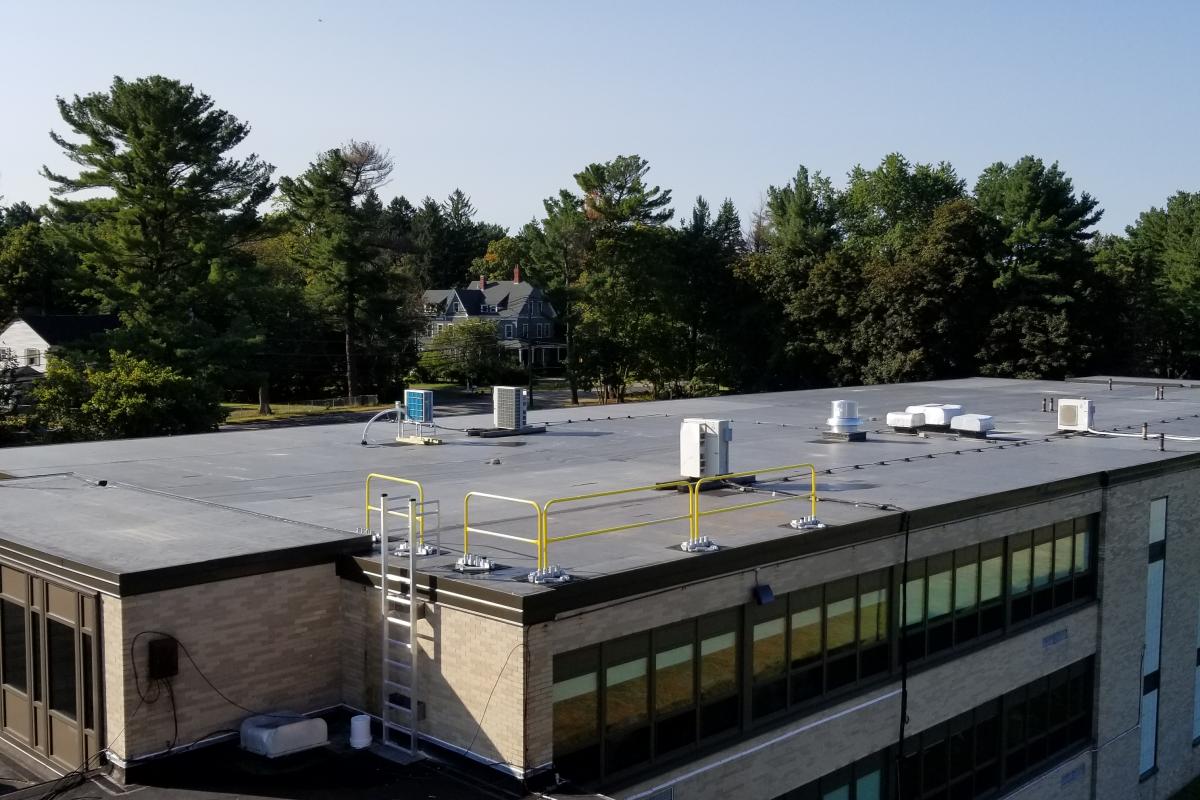
Riverside's government building portfolio is centered on one of the most distinctive civic cores in Southern California: the Mission Inn Federal Hotel complex, the Riverside County Courthouse, Riverside City Hall on Main Street, and the network of fire stations and police facilities that serve a city that has grown substantially into the Inland Empire's expanding suburban landscape. Riverside County's administrative campus on Lemon Street houses county government operations that serve one of California's fastest-growing counties. All of these facilities, from the ornate Spanish Colonial Revival civic buildings downtown to the utilitarian fire stations in newer development areas like Orangecrest and La Sierra, require roofing systems capable of performing in an Inland Empire climate defined by extreme summer heat, wildfire smoke events, and the occasional severe rainstorm that overwhelms drainage systems sized for the region's normally minimal precipitation.
California's public procurement framework for construction is among the most regulated in the country. The City of Riverside and Riverside County both procure roofing work through the competitive bidding process required under California's Public Contract Code. Projects over $25,000 require a formal public bid process with advertisement, plan distribution, and sealed bid opening. The city and county use online bid portals, the city through its purchasing portal, the county through its Procurement Services online system, and both require contractor prequalification or registration before bids can be accepted. California's Disabled Veteran Business Enterprise program mandates that state-funded projects include a 3% DVBE participation goal, and Riverside County has its own small business certification program for county-funded contracts. Bid responsiveness is reviewed rigorously; missing a required form or certification results in rejection rather than an opportunity to supplement.
California's Labor Code requires prevailing wages on all public works projects, regardless of whether federal funding is involved. This is the most expansive prevailing wage requirement in the country: purely city or county funded projects in Riverside trigger the same prevailing wage obligations as federally funded work. The California Department of Industrial Relations publishes prevailing wage rates for Riverside County, and the rates for roofing classifications in Southern California are among the highest in the state. DIR registration is required for all contractors and listed subcontractors on public works projects, and electronic certified payroll submission through DIR's eCPR system is mandatory. On-site compliance monitoring by Labor Compliance Programs, operated either by the awarding authority or a third-party administrator, is standard practice on larger Riverside government roofing contracts.
California's CSLB licensing requirements create a baseline that roofing contractors must meet before any other qualification is considered. The C-39 Roofing contractor license from the California Contractors State License Board is the required classification for roofing work as a prime contractor. The CSLB license requires a qualifying individual to pass the C-39 exam, demonstrate four years of journeyman experience, and maintain active workers' compensation and contractor's bond. Government project bid documents verify C-39 license status and DIR registration simultaneously during responsiveness review. A contractor with a valid C-39 but lapsed DIR registration, or vice versa, will be found non-responsive and excluded from award, regardless of bid price. Both credentials must be current and verified before the bid date.
Riverside's climate presents a combination of challenges that roofing systems must address across different failure mechanisms. Summer temperatures in the Inland Empire regularly exceed 110 degrees Fahrenheit, with roof membrane surface temperatures reaching 180 degrees or higher. UV degradation accelerates significantly at Riverside's latitude and elevation relative to coastal California locations. Tile roofing, both clay and concrete, is the dominant system on Riverside's older institutional buildings, and the Mission Inn area's historic structures require period-appropriate clay tile sourced to match existing profiles. Fire seasons create an additional concern: the wildfire events that have become more frequent in San Bernardino and Riverside County mountains create ember transport conditions that mandate fire-rated roofing assemblies on government facilities designated as critical infrastructure under California's fire-resistive construction requirements.
Historic preservation in Riverside is managed at multiple levels. The Mission Inn is a National Historic Landmark and a California Historical Landmark, with oversight from both the National Park Service and the California State Historic Preservation Office. The downtown Riverside Historic District encompasses numerous civic and commercial buildings that require review by the Riverside Historic Preservation Commission for exterior alterations. Riverside County's Courthouse complex includes buildings of varying historic significance that are subject to both county review and state CEQA review for significant alterations. Contractors working in Riverside's historic core must maintain current knowledge of the review hierarchy, local commission, state SHPO, and federal NPS for NHLs, and must budget for multi-stage review timelines that typically extend pre-construction by four to eight months on complex projects.
California's energy efficiency requirements for commercial buildings are set by the California Energy Commission's Title 24 Building Energy Efficiency Standards, which are updated on a regular cycle and are among the most demanding in the country. Title 24 establishes mandatory cool roof reflectance requirements for low-slope roofing on nonneighborhood buildings, and the California Energy Commission's Cool Roof Rating Council (CRRC) certification system is the recognized compliance pathway. Riverside government project specifications routinely require CRRC-rated roofing products with specific aged reflectance and emittance values. The California Green Building Standards Code (CALGreen) adds additional requirements for publicly funded construction, including material content documentation and waste management plan requirements that affect how roofing demolition debris is handled and reported.
Riverside Fire Department operates stations across a city that spans over 80 square miles, from the dense urban core to the newer suburban developments in the foothills. Station reroofing projects in Riverside must accommodate the department's requirement that all stations remain operational throughout construction: no apparatus company goes out of service for a roofing project. This requirement is enforced at the battalion chief level, not just by facilities staff, which means project superintendents must establish direct communication protocols with station commanders at each facility before work begins. Some Riverside fire stations are in seismically upgraded buildings where structural modifications to accommodate modern roofing systems require engineering review: California's seismic requirements affect roof deck attachment and parapet design in ways that aren't relevant in non-seismic regions.
Riverside County's public library system, Riverside County Library Services, operates branches in over 30 communities across the county. The Central Library in Riverside serves the urban core, while branches in Jurupa Valley, Perris, Moreno Valley, and unincorporated communities represent a diverse portfolio of building ages and construction types. Library reroofing projects in Riverside County involve the county's Facilities Management Division, which manages capital projects for county-owned facilities through the county's procurement system. Contractors who complete successful library projects with the county develop references that carry weight across other county facility categories, including health department offices, administrative buildings, and community services facilities. Riverside County's capital program is large and consistent enough that a strong track record within the system creates a compounding advantage over successive procurement cycles.
- What California prevailing wage requirements apply to Riverside government roofing projects?
- California Labor Code requires prevailing wages on all public works projects, including those funded entirely from city or county general funds: there is no minimum threshold for prevailing wage applicability in California beyond the type-of-work definition. Riverside County roofing rates are published by the California Department of Industrial Relations, and all contractors and listed subcontractors must be registered with DIR. Electronic certified payroll submission through the eCPR system is mandatory, and awarding authorities are required to monitor compliance through a labor compliance program.
- What CSLB license is required for roofing work on Riverside government projects?
- The California Contractors State License Board C-39 Roofing license is the required classification for prime contractors performing roofing work on public projects in Riverside. A C-39 qualifying individual must pass the CSLB roofing exam and demonstrate at least four years of journeyman-level experience. Contractors must also maintain active DIR public works registration separately from the CSLB license, and both credentials are verified during bid responsiveness review before any other evaluation occurs.
- How do California's Title 24 cool roof requirements affect Riverside government roofing specifications?
- California's Title 24 Energy Standards require minimum Cool Roof Rating Council certified aged solar reflectance and thermal emittance values for low-slope roofing on nonneighborhood buildings. In Riverside's hot climate zone, these requirements are more stringent than in coastal California locations, reflecting the larger cooling load differential between reflective and non-reflective roofing. Government project specifications often exceed Title 24 minimums, particularly for facilities with significant cooling loads, using CRRC-certified product data as the compliance documentation pathway.
- What seismic considerations affect roofing system design on Riverside government buildings?
- Riverside is located in a region of high seismic hazard, and buildings designated as essential facilities, fire stations, police facilities, emergency operations centers, are designed to higher seismic performance standards under California's Essential Services Building Act. Roofing system attachments, parapet seismic bracing, and mechanical equipment anchorage on these buildings are designed by structural engineers to meet IBC seismic zone requirements, and proposed reroofing systems must be compatible with the existing seismic design intent. Modifications to parapets or structural elements during reroofing require engineering review and DSA approval for certain facility types.
- What procurement portal does Riverside County use for library and county facility roofing bids?
- Riverside County's Procurement Services Division manages competitive bids through the county's online procurement portal, where vendors must complete registration including insurance verification and contractor license documentation before bids are accepted. Library system capital projects are managed in conjunction with the county's Facilities Management Division, which coordinates construction documents and project oversight. The county posts solicitations to the portal and sends notification to registered vendors in relevant categories, making current portal registration the practical requirement for receiving bid documents on library and other county facility projects.