
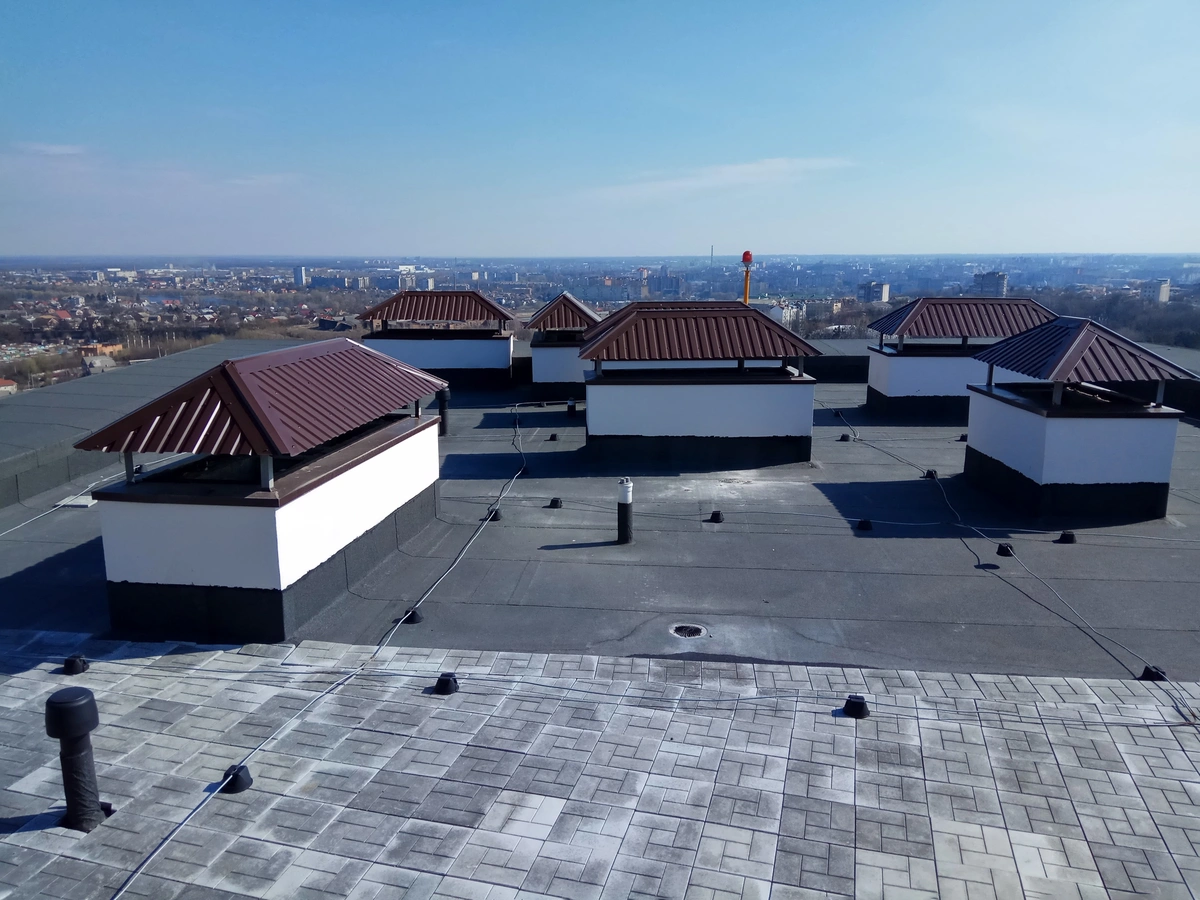
Bourns Inc., a global electronics manufacturer headquartered on Innovation Drive in Riverside, California, represents the Class A corporate office and R&D campus environment that occupies the premium end of the Inland Empire commercial real estate market. Office building owners throughout Riverside County, from the downtown Class B towers to the suburban corporate campuses of Moreno Valley and Rancho Cucamonga, operate under California Title 24's stringent energy requirements while managing a climate of extreme summer heat, seismic risk from the Southern California fault system, and the SCAQMD air quality framework that governs all construction activity in the South Coast Air Basin.
Occupied building protocols in Riverside office buildings are shaped by the extreme summer heat that can push interior temperatures above comfort thresholds within minutes of HVAC failure. Any roofing work that disrupts HVAC operations must be scheduled before 7 AM or after 6 PM during June through September, or executed on weekends when building occupancy is minimal. The daily shut-down protocol must include a heat-watch component: if the afternoon forecast exceeds 105 degrees Fahrenheit, all rooftop HVAC isolation work should cease by noon to allow systems to be fully reinstated before peak afternoon heat. Require that this protocol be written into the project specification rather than left to field judgment.
LEED options are relevant throughout the Riverside office market, but the specific drivers differ from cooler California markets. For Riverside, the dominant LEED value proposition is energy cost reduction: at SCE (Southern California Edison) commercial rates and with Riverside's nine-month cooling season, every percentage point of reduced cooling load translates directly to operating cost savings that improve building NOI and tenant retention. A high-SRI white membrane, already required by Title 24, combined with above-code polyiso insulation achieves both LEED Energy and Atmosphere credits and genuine operating cost improvements. SCE's Savings by Design program offers incentives for above-code energy performance in commercial buildings; incorporate the incentive into the project financial model at the specification stage.
HVAC coordination on a Riverside office building requires a heat-season isolation management protocol that most national roofing contractors have not developed for markets outside the extreme heat zone. HVAC equipment on a Riverside office building operates at near-maximum capacity from May through October, and any interruption to cooling capacity creates immediate tenant comfort emergencies. Phase rooftop equipment isolation so that no more than one zone's units are offline simultaneously, require temporary portable cooling units as a backup for any isolation event longer than four hours during the hot season, and confirm that the mechanical contractor has verified temporary connection capacity before any equipment is isolated.
California Title 24 compliance for Riverside office buildings (climate zone 10) requires minimum Aged Solar Reflectance of 0.63, Thermal Emittance of 0.75, and R-25 CI. These are non-negotiable state code requirements that apply regardless of lease terms or building owner preference. The compliance pathway must be documented in a Title 24 energy calculation and field-verified at project completion. Failure to obtain a compliant Title 24 form will delay the final building inspection and certificate of occupancy, which in an occupied building creates a regulatory compliance issue as well as a construction delay.
Lease obligations in Riverside's Class A office market are influenced by the competitive pressure of the Inland Empire's rapidly growing commercial base. Many corporate campus leases in the Riverside area include landlord obligations to maintain the building's energy performance certification status, Title 24 compliance is embedded in the lease, and disrupting that certification through a non-compliant roofing project would create a lease violation. Review all active leases with legal counsel before finalizing the roofing specification, particularly for buildings where energy benchmarking is a lease condition.
California CSLB C-39 licensing is required for all commercial roofing in Riverside. The City of Riverside Community and Economic Development Department and Riverside County Building and Safety both require permits and inspections. Seismic requirements under the California Building Code apply to rooftop equipment anchorage and wall-to-roof transition flashings; engage a structural engineer to review these details before construction begins. Allow six to eight weeks for permit plan review on large office building projects in Riverside County.
Preventive maintenance on a Riverside office building roof must include annual membrane washing to restore cool-roof reflectance values, Inland Empire dust accumulation reduces SRI significantly within a year of installation, and pre-winter drain clearing before the brief but intense Southern California storm season. Seismic inspection protocols after any Inland Empire or Southern California event above magnitude 4.0 should include examination of all wall-to-roof transition flashings for movement or tearing. Budget $0.12 to $0.18 per square foot annually for a Riverside Class A office building roof, reflecting California premium labor rates and the maintenance requirements of an extreme-heat climate.
Contractor selection for a Riverside office building project should prioritize CSLB C-39 licensure, Title 24 documentation competence, seismic flashing design experience, and familiarity with SCE's Savings by Design program. References from other Inland Empire Class A office property managers are the most relevant qualification benchmark; the combination of extreme heat, seismic requirements, California code complexity, and premium labor costs makes the Riverside office building market a demanding environment for contractors without specific regional experience.
- What Title 24 requirements apply to Riverside Class A office buildings?
- Climate zone 10 requires minimum Aged Solar Reflectance of 0.63, Thermal Emittance of 0.75, and R-25 CI. These are state code minimums that must be documented in a Title 24 energy calculation and field-verified at project completion. Above-code performance may qualify for SCE Savings by Design incentives.
- How should HVAC isolation be managed during a Riverside office re-roof?
- Phase equipment isolation so no more than one zone is offline simultaneously. Require temporary portable cooling as backup for any isolation event longer than four hours during May through October. Schedule all HVAC isolation work before 7 AM or after 6 PM during peak heat months, and include a written heat-watch protocol specifying shutdown triggers.
- Do SCE programs offer incentives for above-code office building roof insulation in Riverside?
- Yes. SCE's Savings by Design program offers incentives for commercial buildings that exceed Title 24 energy performance standards. The program requires early engagement, typically before construction begins, and involves a performance modeling exercise to calculate the incentive amount. Contact an SCE-approved energy consultant at the specification stage.
- What seismic requirements affect Riverside office building roof systems?
- California Building Code seismic requirements mandate ductile connections at wall-to-roof interfaces and structural anchorage for rooftop equipment. A California-licensed structural engineer should review counterflashing slip-joint details and equipment curb anchorage before construction begins. Post-seismic inspection protocols should be part of the ongoing maintenance program.
- Why is annual membrane washing important for Riverside office building roofs?
- Inland Empire dust and particulate accumulation significantly reduces solar reflectance values on white TPO membranes within one to two years of installation. Annual low-pressure washing restores SRI values, is required to maintain some cool-roof warranty certifications, and is needed to preserve the energy efficiency benefits that justify the cool-roof investment.