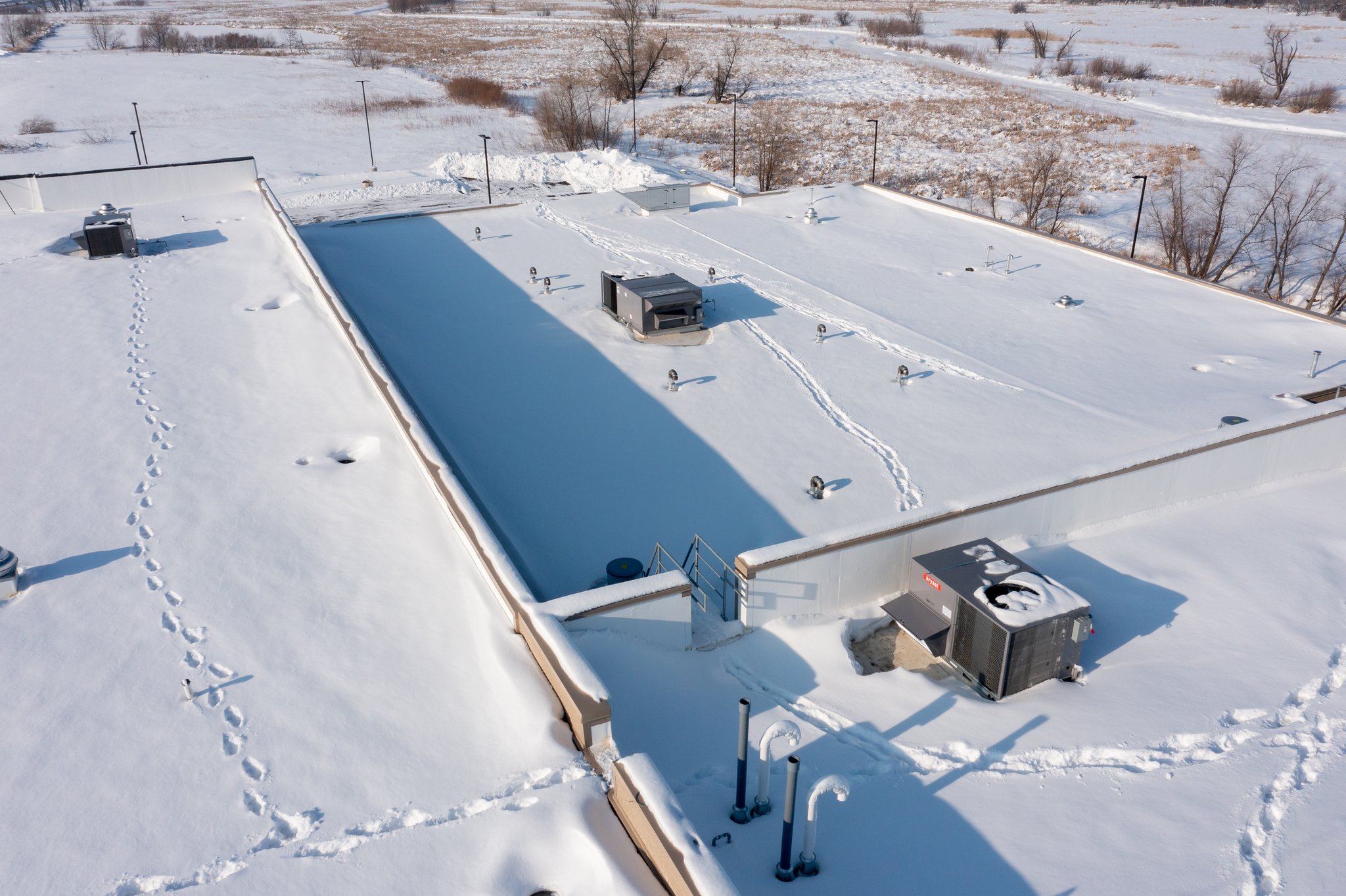
Managing roofs across several buildings usually means managing several roofers: one vendor for the flex park, another for the retail pads, a third that did a warehouse repair two years ago and may or may not answer. Every roof has a different service history, in a different format, if it has one at all. A roof service agreement collapses all of that into one arrangement: every building on one schedule, one crew standard, one report format, and one phone number that picks up for all of them.
The structure is built for property managers and owners with a roster, not a roof. Buildings enter the agreement after a baseline walk, whatever their age, membrane, or condition. Mixed portfolios are normal in the Inland Empire, a TPO distribution roof by the 215, a modified bitumen office building downtown, a coated metal shop in Hunter Park, and the agreement carries them all, with the visit checklist adjusted to each system.
Two Visits a Year, on Every Roof in the Roster
Each covered building gets two scheduled visits a year, sequenced so the whole roster is serviced in the same window. The late-fall pass comes ahead of the rainy months: Santa Ana winds have been dropping branches, grit, and packaging debris on rooftops all autumn, so every drain, scupper, and overflow gets cleared and every seam and flashing checked while everything is still dry. The spring pass documents what the rain season actually did, closes up sealant and lap repairs before the long heat sets in, and photographs every roof in the same week so condition comparisons across buildings mean something.
Small repairs are handled during the visit, splits, blisters, lifted flashings, loose termination bars, without a second dispatch or a second invoice. Anything bigger is photographed, priced, and queued for your approval.
One Report for the Whole Roster
After each cycle you get two layers of paper: a per-building condition report with photos, completed work, and recommendations, and a roster-level summary that ranks the portfolio; which roofs are sound, which need scheduled work, which are approaching replacement. That summary is the document that survives budget meetings. It also keeps manufacturer warranty documentation current on every covered roof, and it gives whoever replaces you someday a complete history instead of a filing cabinet mystery.
One Call When Something Goes Wrong
When a storm opens a seam on one building at 6 a.m., you make one call, to a contractor who already has the roof plan, the access notes, and the gate codes on file. Agreement buildings get priority dispatch across the whole roster: no re-explaining the property, no waiting behind first-time callers. For a manager fielding tenant calls across Riverside and the surrounding logistics corridors, that single point of contact is usually the reason the agreement gets renewed.
Portfolio Agreement Questions
Can buildings join the agreement at different times?
Yes. Each building enters after its own baseline walk and slots into the next visit cycle. Acquisitions get walked and documented as they close, so the roster and the reporting stay complete as the portfolio changes.
Is billing consolidated or per building?
Whichever your accounting needs: one annual invoice for the roster, per-building invoices coded to each property, or a split between ownership entities. The price per building is set by roof area, penetrations, and access, so the roster total is transparent.
Can reports match our property-management software?
Yes. Reports are delivered in a format compatible with standard property-management and work-order systems, and we can name files and code line items to your conventions so nothing has to be re-keyed.
Do all buildings get the same service level?
The two-visit cadence is the floor. Roofs with heavy equipment traffic, chronic problem areas, or warranty terms that demand more frequency can run quarterly, and the agreement states each building's cadence explicitly.