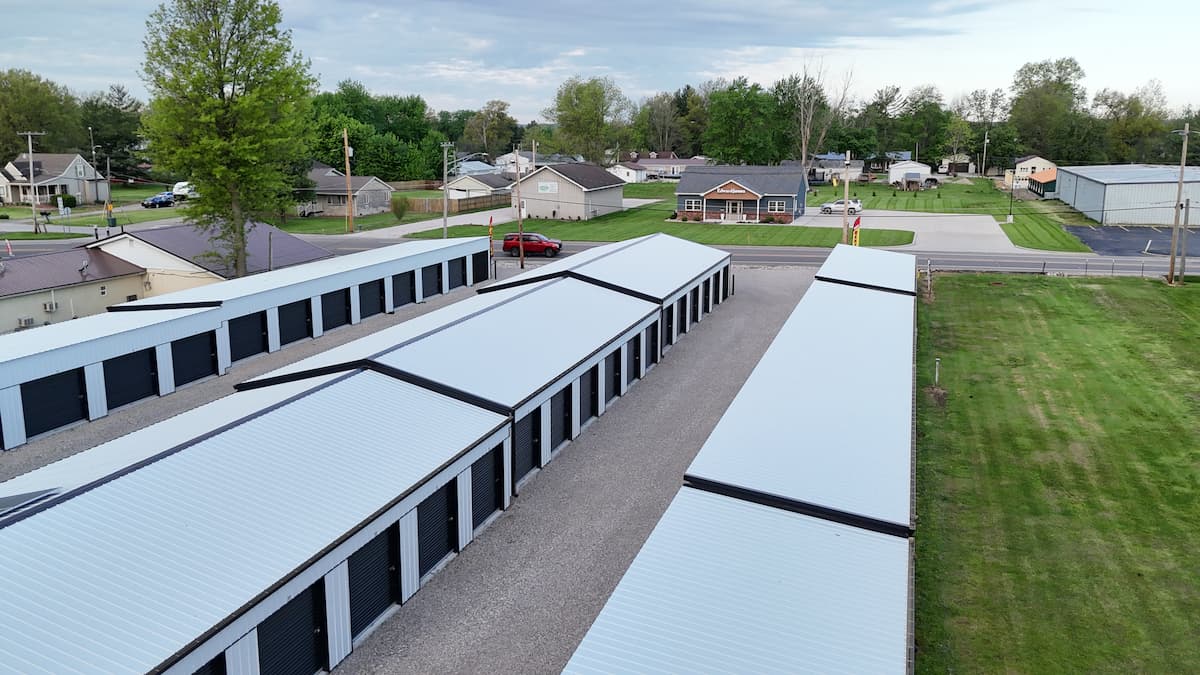
StorQuest Self Storage operates a large facility on Chicago Avenue in Riverside, California, serving the Inland Empire's growing population of households and small businesses who need reliable, accessible storage in one of Southern California's fastest-expanding metro corridors. Commercial roofing for self-storage in Riverside sits at the intersection of two powerful forces: California's rigorous Title 24 energy standards and the Inland Empire's punishing thermal environment, where summer temperatures regularly exceed one hundred degrees Fahrenheit and rooftop surface temperatures can reach two hundred degrees or more on dark membranes.
California's Title 24 Building Energy Efficiency Standards set prescriptive requirements for commercial roof assemblies that go well beyond what most other states require. In Climate Zone 10, which encompasses most of the Riverside area, low-slope commercial roofs must meet minimum solar reflectance and thermal emittance values that effectively require cool-roof membranes. We specify TPO and PVC systems with SRI values that meet or exceed Title 24 requirements, and we provide California Energy Commission documentation as part of every project closeout package to support building permit final inspection.
Compliance with Title 24 is not merely a checkbox exercise: the energy savings are real and meaningful for Riverside storage operators. A code-compliant reflective membrane reduces the heat island effect on the building below, lowering the energy consumption of climate-controlled units and reducing the heat load on the building structure itself. Over a twenty-year roof service life, the energy savings from a properly specified reflective system can significantly exceed the incremental cost of the higher-quality membrane required for compliance.
Self-storage footprints in the Inland Empire tend to be large and single-story, maximizing net rentable area on affordable land. These expansive flat roofs collect dust and debris from the region's frequent wind events, which can clog drains, abrade membrane surfaces, and create fire hazards at perimeter edges where dry debris accumulates. We include drain basket inspection and cleaning in every Riverside maintenance agreement, and we specify smooth membrane surfaces where code allows to minimize debris adhesion.
Tenant protection in Riverside's extreme heat environment means keeping interior temperatures manageable even in units without active cooling. A reflective roof membrane directly reduces the radiant heat load on stored contents. Electronics, vinyl records, photographs, wine, and other heat-sensitive items stored in standard (non-climate-controlled) units are meaningfully better protected under a reflective roof than under a dark one, even without any HVAC investment. This is a selling point that Riverside operators can communicate directly to price-sensitive tenants who cannot afford climate-controlled units.
Drainage on Riverside storage roofs must account for the region's highly variable precipitation pattern: very dry for most of the year, with intense atmospheric river events in winter that can deposit several inches of rain in a short period. A roof drainage system that sits dormant for months and then must handle peak flows without warning must have clear drain pathways, properly functioning strainers, and adequate overflow scuppers. We recommend pre-winter drain inspections every October to clear accumulated summer debris before the first significant rain event.
Seismic considerations apply to roofing in Riverside, which sits in an active seismic zone near several significant fault systems. Roof assemblies add dead load to structures, and the performance of rooftop-mounted equipment during a seismic event depends in part on how well curbs and attachments are integrated with the roofing system. We design penetration and equipment curb details with seismic restraint in mind, using code-compliant attachment methods that maintain waterproofing integrity under the differential movement that an earthquake can impose.
Re-roofing Riverside storage facilities during the dry season allows for the most controlled installation conditions, but the dry, dusty environment presents its own challenges: adhesion surfaces must be thoroughly cleaned before bonding, and static electricity in dry desert air can affect some membrane handling procedures. Our Inland Empire crews are trained for desert installation conditions and carry the specialized equipment needed to maintain quality in low-humidity, high-heat environments.
From facilities near the University of California Riverside campus to large-format properties in Jurupa Valley and Moreno Valley, our roofing team serves self-storage operators throughout the Inland Empire with systems designed to satisfy California's regulatory requirements and to perform through the region's demanding climate. Contact us today to learn how a Title 24-compliant roofing system can reduce your operating costs while protecting your tenants and your investment.
- What does Title 24 require for a Riverside self-storage roof?
- In Riverside's Climate Zone 10, Title 24 requires minimum solar reflectance and thermal emittance values for low-slope commercial roofs that effectively mandate cool-roof membranes. Qualifying TPO and PVC products are standard in the market; we provide CEC documentation as part of every project closeout.
- How much can a reflective roof save on energy costs at a Riverside storage facility?
- Savings vary by facility size and climate-control mix, but reflective membranes typically reduce cooling energy consumption meaningfully on facilities with climate-controlled units. Over a twenty-year roof life, cumulative savings often exceed the incremental cost of the premium membrane required for Title 24 compliance.
- Why do Riverside storage roofs need pre-winter drain cleaning?
- Riverside's dry season allows dust, dirt, and windblown debris to accumulate in drain baskets and scupper channels over many months. When winter atmospheric river events arrive, a clogged drain can rapidly create ponding across the full roof surface. Annual October drain cleaning prevents this.
- Do seismic requirements affect how I should spec my Riverside storage roof?
- Yes. Equipment curbs and heavy rooftop items should be attached with seismic-rated methods that maintain waterproofing integrity under the differential movement an earthquake can cause. We design all penetration details to meet current California seismic requirements as part of standard practice.
- Can a cool roof help my standard (non-climate-controlled) storage units in Riverside?
- Yes. A reflective membrane reduces the radiant heat load on the building interior, lowering peak temperatures in standard drive-up units. This protects heat-sensitive stored items and is a legitimate marketing point for operators offering standard units to budget-conscious customers.