
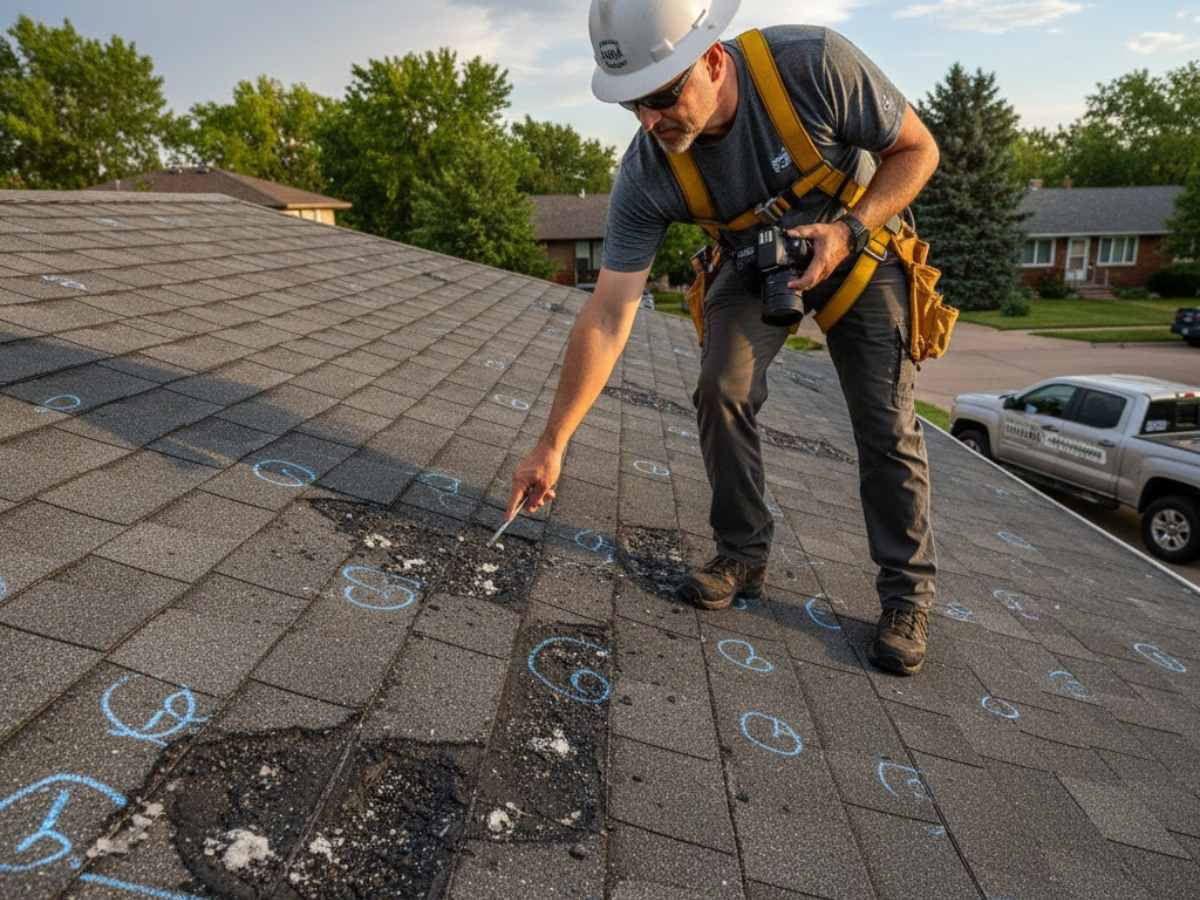
A commercial roof insurance claim in Riverside is decided by what gets written down before the adjuster ever climbs the ladder. Owners across Downtown, University, La Sierra, Arlington, Magnolia Center, Orangecrest, Wood Streets, Hunter Industrial Park, and the Sycamore Canyon area call us for the same reason: a leak, a wind event, or a routine inspection turned up damage, and the next step is proving what happened, where, and how bad it is. We're your roofing contractor, not a public adjuster: we inspect, document, and produce a scope the carrier and the owner can both work from.
What a Commercial Roof Claim in Riverside Actually Requires
A workable claim file needs more than a phone photo of a stain on the ceiling. It needs dated roof photos tied to specific locations, measurements of the affected area, moisture readings where water intrusion is suspected, and a written description of the roof assembly: membrane type, age if known, insulation, drainage, and prior repair history. Without that baseline, an adjuster has nothing to compare current damage against, and a claim tends to get scoped narrower than the actual repair needs to be.
Documenting the Damage Before the Adjuster Arrives
Our field visit starts before the paperwork does. We walk the full roof rather than only the area someone pointed to from inside, because wind and hail damage rarely stays confined to one spot. We photograph membrane punctures, seam separation, displaced coping and edge metal, granule loss on modified bitumen, and any staining or ponding that points to a drainage failure. Interior leak history from maintenance staff or tenants gets logged too, since it often shows a pattern the roof surface alone won't reveal.
What Happens When the Adjuster Meets Us on the Roof
When the carrier sends an adjuster, we walk the roof with them. That means pointing out the specific conditions we documented, explaining why a given detail failed the way it did, and answering technical questions about the membrane, flashing, or drainage system on the spot. Our role in that meeting is to make sure the adjuster sees the same conditions we saw, not to argue coverage or push a settlement number: that decision sits with the carrier and the policy.
Framing the Complete Scope Beyond the Visible Damage
The most common gap in a commercial roof claim is scope that stops at the obvious puncture or tear and ignores what the damage triggers under current code. If a section of roof needs replacement, code and ordinance requirements may call for upgraded insulation, drainage corrections, or edge securement that wasn't part of the original installation. We itemize that alongside the direct damage repair so the submitted scope reflects the full, accurate cost of putting the roof back to a compliant condition: not an inflated number, just a complete one.
When a Claim Comes Back Denied or Underpaid
Not every claim gets approved at the scope an owner expects, and a denial or a low estimate isn't necessarily the end of it. When that happens, we go back to the roof, compare our original documentation against the carrier's findings, and identify specifically where the assessments diverge: a missed section, a different cause-of-loss conclusion, or damage that was present but not measured. We put that comparison in writing so the owner and their adjuster have something concrete to work through, rather than a dispute based on memory.
Riverside's Property Insurance Market, in Plain Terms
California's commercial property insurance market has tightened in recent years, with carriers more selective about renewals and more attentive to roof condition, age, and maintenance records during underwriting. That makes a documented roof history, inspection reports, prior repairs, coating maintenance, useful for more than a single claim; it's part of what keeps a policy renewable at a reasonable rate. Building owners in the Inland Empire are increasingly asked for this kind of documentation before a policy renews, ahead of any loss.
Why the Inland Empire's Warehouse Stock Changes the Claim
Riverside sits inside one of the largest concentrations of logistics and warehouse space in the country, with distribution buildings stacked along the 215, 60, and 91 corridors and clustered near March Air Reserve Base. Those low-slope roofs are typically large, single-membrane TPO fields, and Riverside's long run of summer days over 100 degrees accelerates membrane aging, seam stress, and adhesive breakdown faster than milder climates would. A claim on a warehouse roof often involves square footage and roof age that a small retail building never sees, which is exactly why a documented, section-by-section survey matters more, not less, on these properties.
The best time to start a claim file is before the next Santa Ana wind event or winter storm adds to the damage. Commercial roofs across Riverside, Jurupa Valley, Moreno Valley, Corona, Ontario, Fontana, San Bernardino, Redlands, Perris, and Temecula tend to fail in stages: a lifted seam or cracked flashing lets water in, and each following weather cycle widens the path before anyone notices from the ground. Calling early gives us time to inspect, document conditions before they worsen, and build a scope that holds up whether the roof needs a targeted repair or a full section replacement.