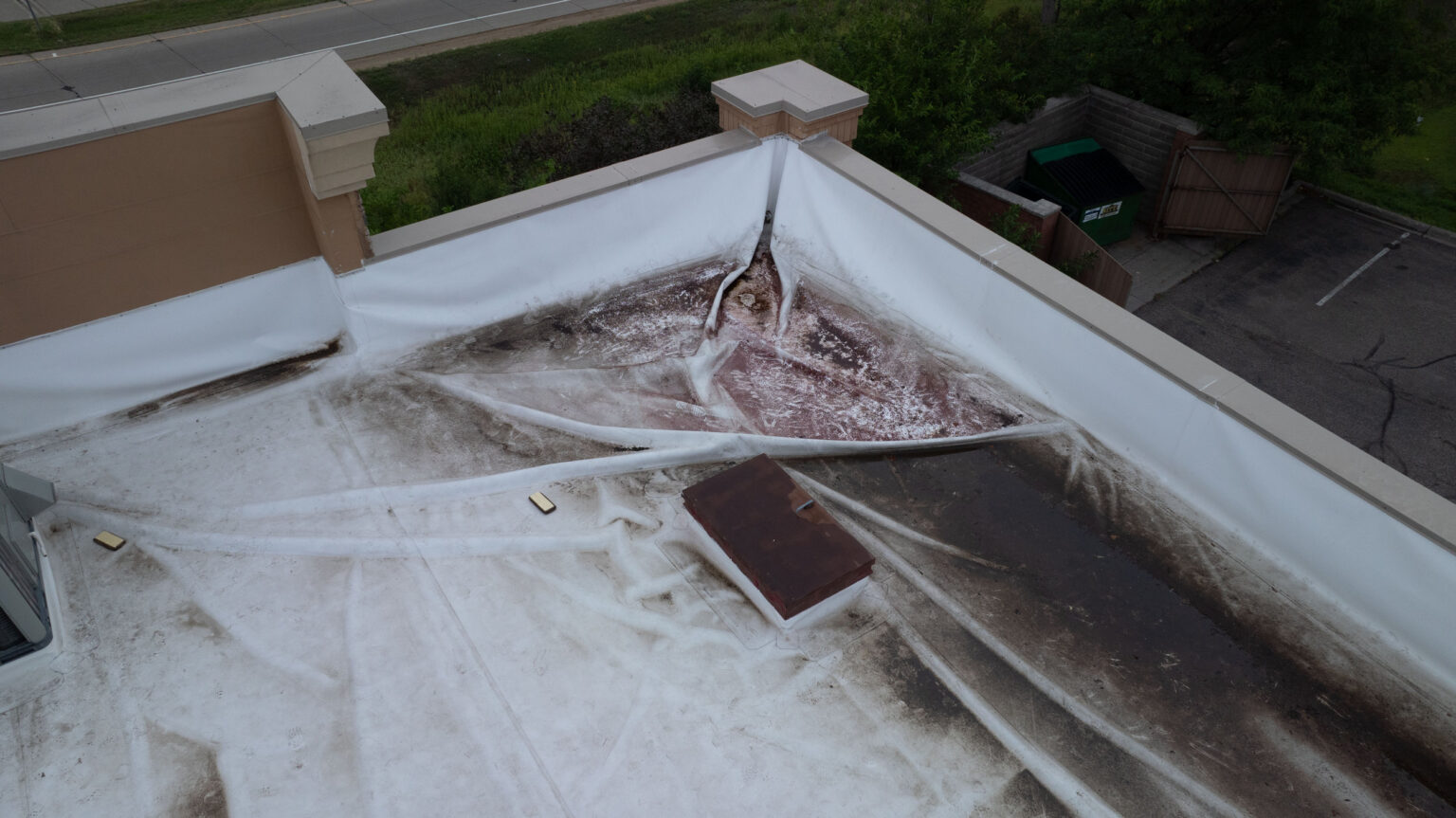
Coordination is the part of a commercial roof claim that has nothing to do with the repair itself and everything to do with whether the claim goes smoothly. It's the difference between a scattered set of phone photos and a claim file an adjuster can act on the first time they open it — dated photographs organized by roof section, measurements that match the damage described, moisture readings recorded where they were taken, and a written narrative that ties the physical evidence together. We're your roofing contractor, not a public adjuster — our job is putting that file together and standing on the roof with the adjuster when they review it.
Building the File From the First Roof Walk
Every claim starts with a full roof inspection, not a spot check of the area someone reported. We record the roof's assembly — membrane type, approximate age, insulation, drainage layout, parapets, curbs, and any visible prior repairs — alongside the specific damage under review. That baseline matters because an adjuster evaluating a claim needs to know what the roof looked like generally, beyond what's wrong with the one section in question.
Keeping the Timeline and the Photos Aligned
A claim that drags on usually has a documentation problem more than a coverage problem — photos taken on different visits without dates, damage described in one round of notes that doesn't match measurements taken in another. We keep the inspection dates, photo sets, and measurements tied together from the first visit through any follow-up, so the file tells one consistent story instead of a patchwork one.
Standing on the Roof With the Adjuster
When the adjuster schedules their site visit, we're there. We walk the same path they walk, point to the specific conditions already documented, and answer technical questions about the membrane, the drainage system, or how a particular detail failed. We don't argue for a coverage outcome in that meeting — our value is making sure the adjuster's on-site findings line up with an accurate, complete picture of the roof.
Separating the Roof Scope From the Claim Decision
Coordination also means being clear about where our role ends. We don't file the claim, negotiate the settlement, or represent the owner's interests against the carrier — that's public adjuster territory, and we're not licensed for it. What we provide is the roofing side: a documented, itemized scope covering the damage and any code-required work the repair triggers, so the owner and their adjuster have accurate technical information to work from.
Coordinating Across Multi-Building and Portfolio Claims
Owners with more than one Inland Empire property — a distribution building near the 60 corridor and a retail pad in Moreno Valley, for instance — often need claim documentation coordinated across several roofs at once, sometimes tied to the same storm event. We keep each property's file separate and clearly labeled while using the same inspection standard across all of them, so a portfolio owner isn't reconciling different documentation styles from different visits.
Coordination works best when it starts early, before a claim deadline is close or a follow-up inspection gets scheduled under pressure. If a Riverside commercial roof has recent storm exposure, wear consistent with its age, or an open question from a prior claim, an inspection now builds the file before it's needed rather than after.