
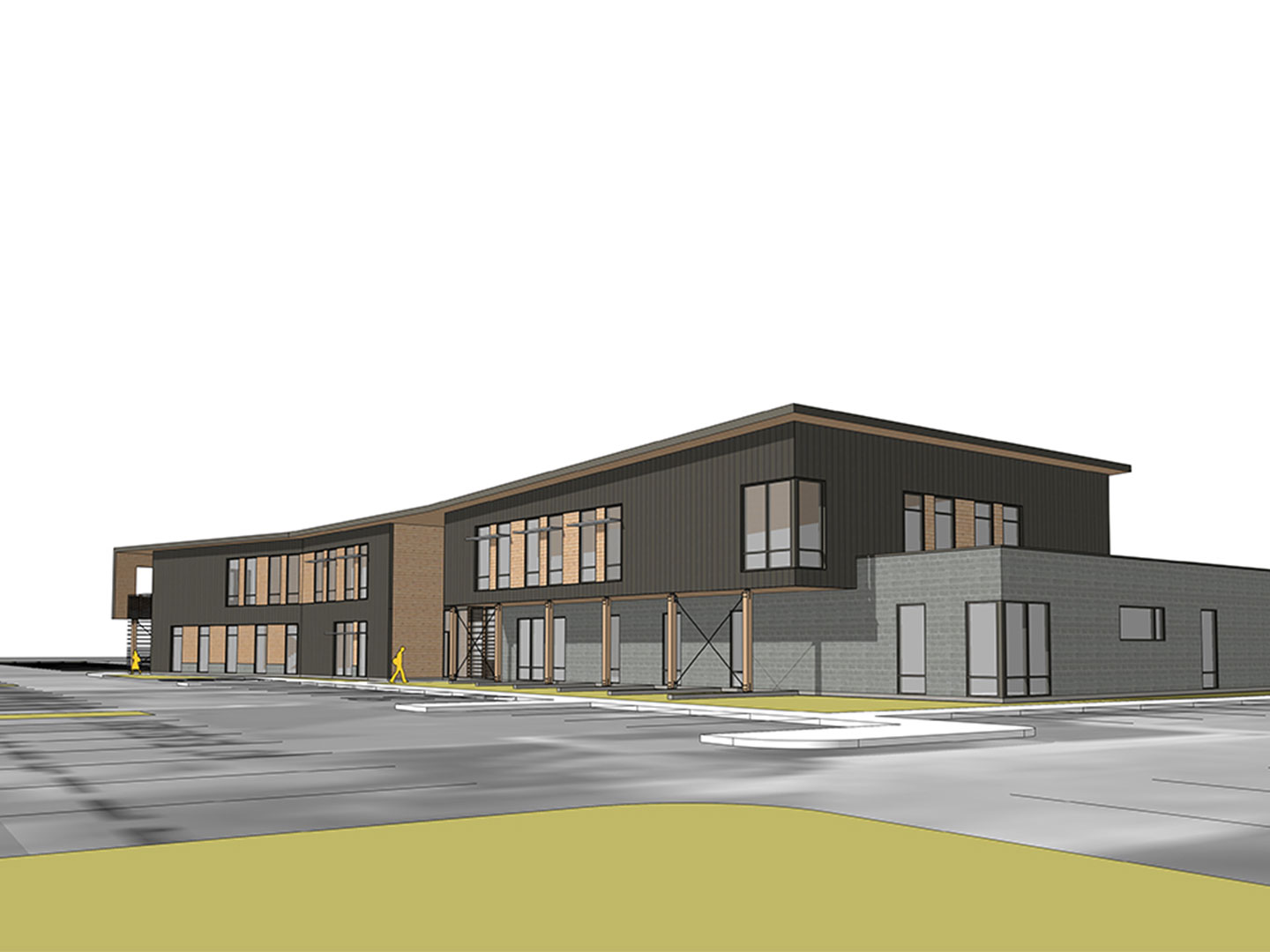
Riverside County has emerged as one of Southern California's fastest-growing healthcare markets, driven by population growth in the Inland Empire that has strained the capacity of established medical infrastructure and accelerated the construction of new hospitals, medical office towers, and outpatient surgery centers across the region. Riverside University Health System Medical Center on Magnolia Avenue anchors the county's public healthcare network, while Desert Regional Medical Center in Palm Springs and a constellation of Kaiser Permanente, Inland Health, and Loma Linda University Health facilities extend coverage through a county that spans from the urban core to the desert fringe. Every one of these buildings, from a multi-story trauma center to a neighborhood urgent care clinic, depends on an intact roofing system as the first barrier between patients and the elements that operate outside the walls.
The Inland Empire's climate presents a paradox for healthcare roofing planners: prolonged drought conditions alternate with episodic atmospheric river events that drop more rain in three days than an average year might see. In 2023 and 2024, successive atmospheric river storms caused widespread roof failures across the region because membranes and drainage systems had experienced years of UV degradation without the periodic thermal flushing that regular rain provides. At healthcare facilities, these sudden inundation events expose every deferred maintenance decision simultaneously. Surgical centers near the downtown Riverside civic core, medical office buildings along Magnolia Avenue, and skilled nursing facilities in Moreno Valley all reported ceiling infiltration during those events: a consequence of aging membranes that had gone uninspected because dry seasons created a false sense of security.
Seismic activity is a unique roofing consideration for Inland Empire healthcare facilities that has no equivalent in most other U.S. markets. The San Jacinto Fault runs directly through Riverside County, and hospitals operating under California's Alfred E. Alquist Hospital Facilities Seismic Safety Act must demonstrate that their structures, including the roofing assembly, can withstand significant ground motion. Roofing details at parapet walls, equipment curbs, and expansion joints must be designed and installed to accommodate the differential movement that occurs during a seismic event. Sheet metal flashings with slip-joint details, flexible pipe boot designs, and membrane attachment methods that allow the substrate to move without tearing the waterproofing layer are all components of a seismically appropriate healthcare roofing system in Riverside.
Medical office building development along the Iowa Avenue and Magnolia Avenue corridors in Riverside has created a new category of roofing client: physician group practices and outpatient diagnostic centers that operate within managed healthcare networks but lack the in-house facilities management infrastructure of a large hospital. These tenants and property owners often defer roofing maintenance because they lack the institutional knowledge to recognize early warning signs, then face emergency repair costs when active leaks threaten expensive imaging equipment, MRI machines, CT scanners, digital X-ray systems, that cost millions of dollars to replace. A planned inspection and preventive maintenance contract addresses this knowledge gap and converts reactive emergency spending into predictable capital maintenance budgets.
The desert microclimate that affects the eastern portions of Riverside County, Palm Desert, Cathedral City, and the Coachella Valley healthcare corridor, creates an extreme UV exposure environment that accelerates membrane aging far faster than coastal Southern California conditions. TPO and PVC membranes at facilities such as Desert Regional Medical Center face cumulative UV radiation loads that visibly degrade surface texture within five to seven years of installation if the membrane is not specified at sufficient thickness. Healthcare facility managers in this corridor should specify sixty-mil or eighty-mil membranes rather than the forty-five-mil standard used in less aggressive climates, and they should include UV stabilizer additive specifications in procurement documents to ensure maximum service life from the installed system.
Infection control requirements during roofing work at Riverside County's healthcare facilities follow California Department of Public Health guidelines and, for Joint Commission-accredited hospitals, ICRA protocols that govern construction and maintenance activities in or above clinical areas. The county's major health systems have implemented formal pre-construction infection control permit processes that require contractors to submit barrier plans, negative pressure specifications, and personnel training documentation before a single fastener is driven. For roofing contractors that primarily serve commercial and industrial clients, this permitting process can be the most unfamiliar and time-consuming aspect of a healthcare project: which is why selecting a contractor with verifiable hospital campus experience in the Inland Empire matters more than simply finding the lowest bid.
Assisted living and memory care facilities have multiplied across Riverside County as the region's demographics shift toward an older population base, with major concentrations in the Temecula Valley, the Hemet-San Jacinto corridor, and western Riverside near the 91 Freeway interchange. These smaller-scale neighborhood care buildings present roofing challenges centered on occupied-building access and minimal disruption to residents for whom routine changes are disorienting and potentially distressing. Phased roofing replacement plans that section the building into manageable work zones, restore full weatherproofing at the end of each daily shift, and avoid loud equipment directly above occupied wings during peak rest hours are the operational standard that facilities in this segment now expect from qualified contractors.
Energy performance standards for California commercial buildings, Title 24 compliance, apply to re-roofing projects as well as new construction, meaning that healthcare facility managers in Riverside cannot simply specify a like-for-like replacement membrane without verifying that the new assembly meets current cool roof requirements. For large hospital campuses that consume enormous quantities of electricity to power imaging equipment, laboratory systems, and round-the-clock HVAC, even modest reductions in rooftop heat gain translate to measurable utility savings. Cool roofing membranes with CRRC-rated solar reflectance values qualify for SCE utility rebate programs available to commercial customers in the Inland Empire service territory, reducing net project costs and improving the financial case for proactive membrane replacement before failure occurs.
Choosing a roofing contractor for a Riverside County healthcare facility should begin with verification of California C-39 roofing contractor licensure and, for hospital work specifically, confirmation of completed ICRA training for all project supervisors. References from Riverside University Health System, Kaiser Permanente Riverside, or comparable Inland Empire healthcare clients provide the most directly relevant evidence of capability. Manufacturer certifications from Duro-Last, Johns Manville, or other major TPO and single-ply manufacturers ensure that warranty coverage will be honored and that installation procedures follow the quality standards those warranties require. At a minimum, any contractor bidding on a healthcare roofing project in Riverside should be prepared to submit a detailed infection control plan before the bid is accepted.
- How do atmospheric river storms affect healthcare roofing systems differently than standard commercial buildings?
- Healthcare facilities house sensitive medical equipment, sterile environments, and vulnerable patient populations, meaning a sudden roof failure during an atmospheric river event can trigger equipment damage, infection control emergencies, and patient care disruptions simultaneously. The problem is compounded by years of drought-induced maintenance deferral, where membranes degrade without regular water exposure to reveal small failures before they become large ones. Planned annual inspections catch this hidden degradation before the next major rain event arrives.
- What seismic design considerations apply to healthcare roofing in Riverside County?
- California's hospital seismic safety requirements extend to roofing assemblies, which must accommodate differential movement at parapet walls, equipment curbs, and expansion joints during ground shaking events. Slip-joint sheet metal flashings, flexible penetration seals, and mechanically attached rather than fully adhered membrane sections in high-movement zones are standard design responses to seismic risk. Contractors unfamiliar with these details may install systems that look correct on a sunny day but fail at the first significant seismic or thermal movement event.
- Why does the desert climate in eastern Riverside County require heavier membrane specifications?
- UV radiation intensity in the Coachella Valley and surrounding desert areas is substantially higher than in coastal markets, and thinner membranes reach their service-life UV degradation threshold years earlier than the same product installed in San Diego or Los Angeles. Specifying sixty-mil or eighty-mil TPO or PVC rather than the forty-five-mil minimum extends service life and reduces lifecycle cost significantly. Healthcare facility managers in Palm Springs and Desert Hot Springs should account for this in their capital planning assumptions.
- What infection control documentation does a Riverside hospital typically require before roofing work begins?
- Most Joint Commission-accredited facilities in Riverside require an ICRA permit application, a contractor-submitted barrier and containment plan, evidence of ICRA training for all supervisory personnel on the project, and a pre-work walkthrough with the hospital's infection preventionist or facilities director. Some facilities also require daily sign-off from a facilities representative before work commences each morning. Contractors who have not worked on hospital campuses before should budget significant time for this administrative process.
- Are Title 24 cool roof requirements mandatory for re-roofing projects at Riverside healthcare facilities?
- Yes, California's Title 24 energy code applies to re-roofing projects that replace more than fifty percent of the existing roof area, requiring the new assembly to meet current cool roof solar reflectance and thermal emittance standards. Healthcare facilities that undertake phased replacements over multiple years may be able to structure project scopes to stay below this threshold in any given permit cycle, but this strategy should be reviewed with the project architect and the local building department. SCE rebate programs available for qualified cool roof installations can offset a portion of the premium cost for higher-specification membranes.