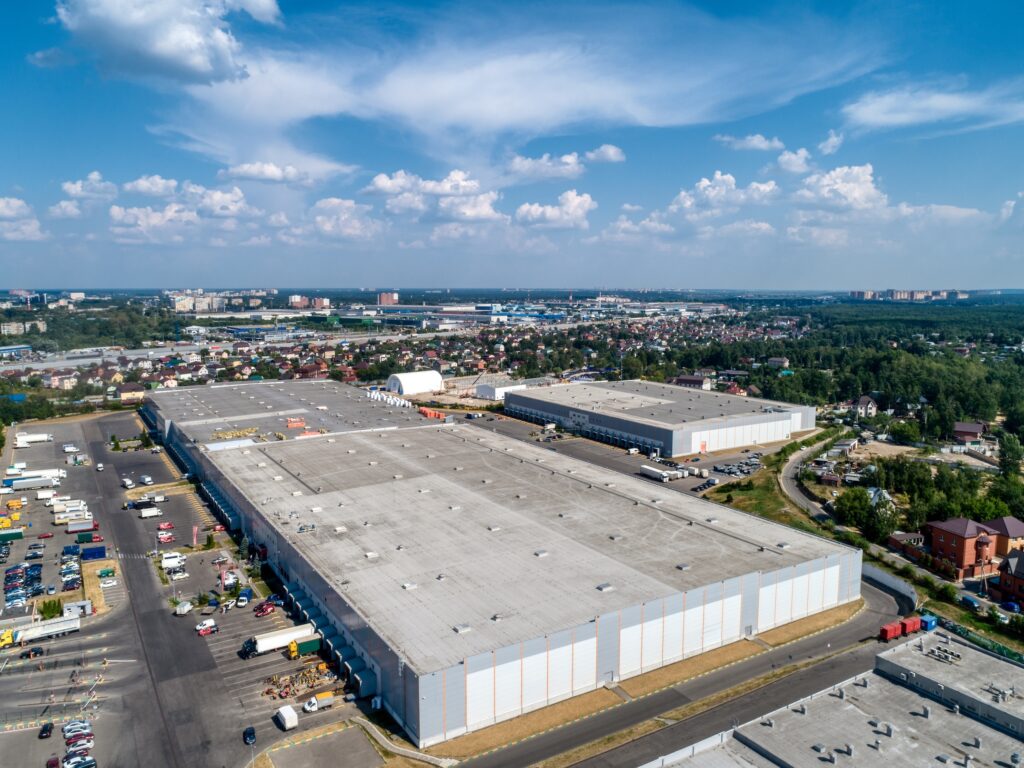
Amazon's Inland Empire fulfillment center on Iowa Avenue in Riverside, California, is one of several massive logistics campuses that have made the Inland Empire the largest and most active distribution hub in the Western United States. Warehouse owners throughout Riverside County, from the city of Riverside itself to Moreno Valley, Perris, and Beaumont, operate in a climate and regulatory environment shaped by California's aggressive energy codes, Southern California's extreme summer heat, and the region's well-documented seismic activity.
California Title 24 cool-roof requirements are non-negotiable for Riverside warehouse construction. The 2022 Title 24 Energy Standards require a minimum Aged Solar Reflectance of 0.63 and Thermal Emittance of 0.75 for low-slope roofs on non-neighborhood buildings in climate zone 10 (Riverside County). A white 60-mil TPO membrane from any of the major manufacturers meets these requirements, but field verification at project completion using a reflectometer or manufacturer certification is required for permit closeout. Specify the membrane manufacturer's Title 24 compliance documentation as a contract deliverable before project closeout or you will face delays in final inspection and certificate of occupancy.
Drainage on a Riverside warehouse must accommodate the region's bipolar precipitation pattern: long dry periods punctuated by atmospheric river events that can deliver two to five inches in 24 hours. The Santa Ana River watershed contributes significant flash-flood risk to low-lying industrial areas near Riverside's floodplain, and roof drainage systems must be sized for the peak intensity events documented in the Riverside County Hydrology Manual rather than national default tables. Internal drains on a 250,000-square-foot warehouse should be on a 40-foot grid rather than the 50-foot grid adequate in lower-intensity rainfall zones, and overflow scuppers must be sized for the 100-year storm event per California Plumbing Code requirements.
California seismic requirements create unique flashing design considerations for Riverside warehouse roofs. Seismic building movement, even at the minor-to-moderate levels typical of the Inland Empire's active fault system, creates inter-story drift that can shear through rigid flashing connections at wall-to-roof transitions. All counterflashings at parapet walls, dock penetrations, and equipment curbs should be designed with slip joints or flexible membrane laps that can accommodate 1 to 2 inches of differential movement without tearing. A California-licensed structural engineer should review flashing details at wall-to-deck transitions on large Riverside warehouse projects, particularly if the building sits within 0.5 miles of a mapped active fault.
Forklift exhaust and battery charging ventilation penetrations on Riverside warehouses face a specific challenge: the Inland Empire's severe air quality management regulations. The South Coast Air Quality Management District (SCAQMD) rules affect the type of exhaust equipment that can be installed, and therefore the size, number, and placement of roof penetrations, in facilities classified as high-throughput logistics operations. Before finalizing the roof scope, confirm with your mechanical engineer that proposed exhaust penetrations comply with current SCAQMD Rule 4641 and any applicable permit conditions for the facility. Changes to exhaust equipment after roof installation are expensive; plan penetration locations before the roofing contract is executed.
Title 24 compliance extends beyond cool-roof surface requirements to the entire roof thermal assembly. California requires R-25 minimum continuous insulation for non-neighborhood buildings in climate zone 10, and the compliance pathway must be documented in a Title 24 energy calculation prepared by a California-certified energy analyst. Polyiso board is the standard insulation choice; tapered polyiso systems that create positive slope while providing continuous insulation coverage are common on large Riverside warehouse projects where the deck is flat. Verify that the insulation manufacturer's Title 24 product approval number is on the approved products list for the jurisdiction before specifying.
California's contractor licensing requirements are among the most stringent in the country. A C-39 Roofing contractor license from the California Contractors State License Board (CSLB) is required for any roofing project in the state, and the license must specifically cover the scope of work. The CSLB database at cslb.ca.gov allows verification of license status, bonding, and insurance; verify all three before contract execution. Riverside County Building and Safety and the City of Riverside Community and Economic Development Department both require permits and inspections for commercial roofing, and both have adopted the California Building Code (CBC), which incorporates OSHPD and other California amendments to the IBC.
Preventive maintenance on a Riverside warehouse roof is dominated by cool-roof performance preservation and drain management around atmospheric river events. White TPO membranes accumulate dust and particulate matter in the Inland Empire's air quality environment, reducing solar reflectance over time. Annual washing with a low-pressure rinse restores reflectance values and is required to maintain some manufacturers' cool-roof warranty certifications. Drain inspections are critical before and after any atmospheric river forecast, as desert dust and wind-deposited debris accumulate in drain bowls during the dry season and can cause significant ponding during the first large storm of the wet season.
When evaluating contractors for a Riverside warehouse roofing project, verify CSLB C-39 licensure as an absolute threshold, then assess experience with Title 24 documentation, SCAQMD compliance coordination, and seismic flashing detailing. References from other Inland Empire logistics operators, particularly those with large Prologis or Goodman Group lease buildings, are the most reliable indicator of contractor competence in this highly regulated and technically demanding market.
- What does California Title 24 require for a Riverside warehouse roof?
- In climate zone 10, Title 24 requires a minimum Aged Solar Reflectance of 0.63 and Thermal Emittance of 0.75 for low-slope non-neighborhood roofs, plus a minimum R-25 continuous insulation assembly. Documentation must be submitted at permit application and field-verified at project completion.
- How does seismic activity affect warehouse roofing details in Riverside?
- Seismic building movement creates inter-story drift that can shear rigid flashing connections at wall-to-roof transitions. All counterflashings should be designed with slip joints or flexible membrane laps capable of accommodating one to two inches of differential movement. A structural engineer should review flashing details on large Riverside projects near active faults.
- What CSLB license is required to perform commercial roofing in Riverside?
- A California Contractors State License Board C-39 Roofing license is required. Verify that the specific license number covers the project scope and that bonding and insurance are current at cslb.ca.gov before signing any contract.
- How should Riverside warehouse drains be sized for atmospheric river events?
- Use Riverside County Hydrology Manual rainfall intensity data rather than national default tables. Atmospheric river events in the Inland Empire can deliver two to five inches in 24 hours; drains sized for national median intensities will fail during these events. Internal drains on a 40-foot grid with 100-year-storm overflow scuppers is the appropriate design standard.
- How often should a Riverside warehouse roof be washed?
- Annual washing with a low-pressure rinse is recommended to restore cool-roof reflectance values that degrade from Inland Empire dust and particulate accumulation. Some Title 24 cool-roof certifications require documented maintenance to remain valid; confirm your membrane manufacturer's requirements at project completion.